Éire Über Alles
Ireland and Northern Ireland are back in the news lately thanks to a band of young Irish rappers known as Kneecap. Their 2024 eponymous movie shoved them into the mainstream and revitalized the fight to revive the Irish language.
The band is mostly known these days for his strong stance in support of Palestine, but Kneecap (a cheeky name referencing the Irish Republican Army’s [IRA] brutal method of discipline for hoodlums during the Troubles: shooting them in the knee) has actually done more for Irish culture and language than just about anyone else.
“These guys… have made me prouder to be Irish than a billion bloated Bonos,” Suzanne Harrington wrote in the Irish Examiner. “They have also done what… successive generations of Irish teachers never managed: they make you want to learn Irish. They have taken intergenerational trauma, and turned it into clever, funny, raucousness. Irishness evolved.”
Kneecap is drawing large crowds even in Britain, producing the delightful juxtaposition of British crowds singing, “Get your Brits out!” in packed London venues. Kneecap played at Coachella this year, followed by a U.S. tour including a show at the Glass House in Pomona in April.
I was aware of Kneecap before the movie, but it wasn’t until I traveled to Ireland and Northern Ireland last year with my wife and daughter and met with Irish journalist Rory Carroll, author of There Will Be Fire: Margaret Thatcher, the IRA, and Two Minutes That Changed History, who wrote this piece about the band in The Guardian, that I was really turned onto them. I subsequently caught the last showing of their film in an LA theater called Vidiots, in Eagle Rock specifically, upon my return to the States.
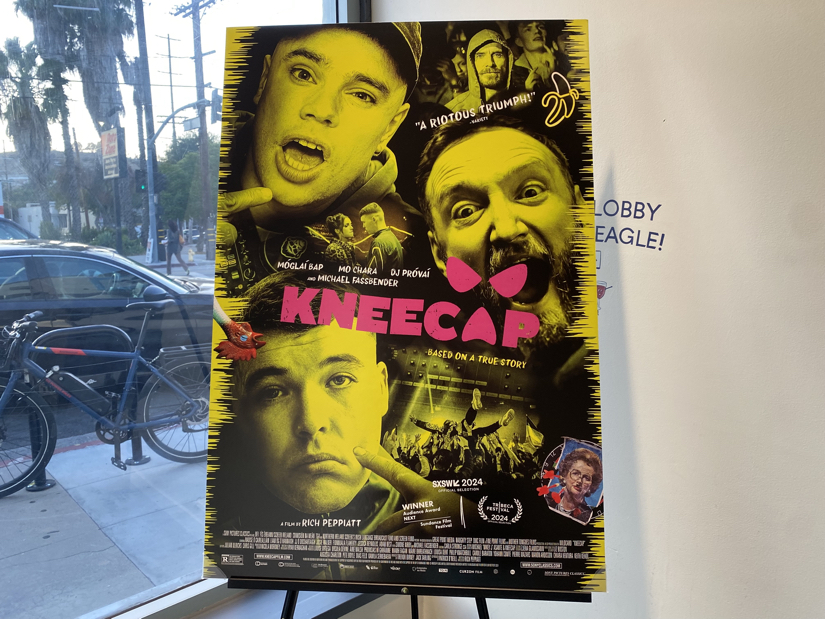
Poster for Kneecap Movie, Photo Credit: Justin Chapman
The “Kneecap” movie, directed by first-timer Rich Peppiatt, is the best film I saw in 2024. Not surprisingly, it has a Rotten Tomatoes score of 96 percent. Unfortunately, even though it won a number of awards, it wasn’t tapped for Best International Feature Film at the Oscars this year. It is authentically hilarious, visually beautiful, and its social and political commentary is spot on. The film includes one surprising cameo—when the hip-hop trio are tripping on ketamine, the face of Irish republican politician Gerry Adams appears. Adams, of course, led Sinn Féin for decades and helped negotiate the Good Friday Agreement that ended the Troubles in Northern Ireland.
I spoke to Adams in December via Zoom for my TV show, “Well Read with Justin Chapman.” We talked about the armed struggle during the Troubles, the Good Friday Agreement, the recent Irish election, whether and when the island of Ireland will be united, his legacy in Irish history, his new book projects, whether he was going to run for president of Ireland in 2025, and more. You can watch the episode here and read the full transcript here.
I also asked him about the Kneecap movie and band. He said he appeared in the movie because the band asked him to.
“They are three local Gaeilgeoirí, three local young people who were reared in the Irish language, and I’m part of that community as well, so I was very pleased to take part,” he said. “It was a bit of fun, a bit of craic. The impact of the film has been to thrust the whole issue of the Irish language straight into the mainstream in a way that it hasn’t been for some time. And I think that’s good. What I like about it, apart from the funny bits, is that it’s smart. It’s clever. It finds smart ways to tell the story, and that’s all to the good and long may they continue.”
Face-to-face with Gerry Adams
The interview with Adams—one of the biggest of my career—came about because of my recent trip to Ireland to visit family and explore the Motherland. My daughter and I have dual citizenship with Ireland, because my grandparents were born there. The Irish Consulate General in San Francisco invited us to participate in the first citizenship ceremony of its kind in the United States in March, which we were delighted to attend. I had been to Ireland before, exactly 20 years earlier in August 2004, but not Northern Ireland, and both were firsts for my daughter and wife.
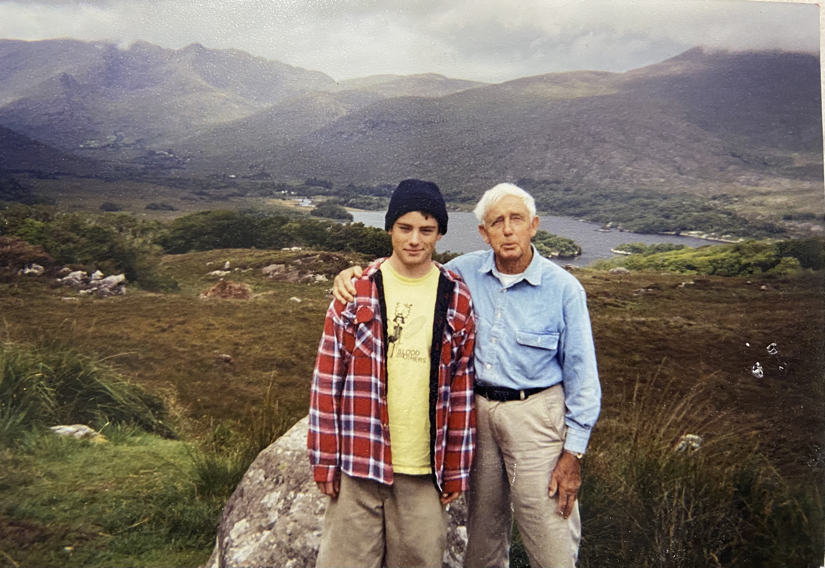
The author with his grandpa in Ireland in August 2004, Photo Credit: authors personal collection
In the weeks leading up to our trip, I reached out to Adams’ gatekeeper, Richard McAuley, who himself spent time in jail as a political prisoner during the Troubles, about the possibility of meeting Adams when we were in Belfast. It turned out that Adams was on holiday while we were there, but McAuley said if I dropped off my copy of Adams’ book Falls Memories at the Sinn Féin bookshop on the Falls Road, he would get Adams to sign it and then mail it to me. I did so and included a copy of my new book Paradise Springs for Adams to keep, with a written request for an interview. McAuley was true to his word—a couple weeks after our return, I did indeed receive a signed copy of Adams’ book along with a card in which Adams graciously accepted my interview request.
One of the questions I had to ask was whether and when there would be a referendum to reunite the island of Ireland.
“The right time to hold the referendum is when we’re going to win it,” Adams said. “The lesson of Brexit is, don’t jump into something without having had the proper lead in, the proper discussion, education, information—without bringing everybody to the point where they can make rational and informed decisions. The Irish government has a huge responsibility. They refuse to plan for the future. The first question every taoiseach (prime minister) should be asked is: have they asked the British government to leave? The Good Friday Agreement is the agreement by which a democratic way of resolving the issue of British rule in Ireland was put together, so it’s peaceful, it’s democratic, it gives the people their say. The British government and the Irish government should be in partnership to bring that about.”
He added that Sinn Féin is calling for a series of citizens assemblies that would bring in experts to inform and educate the public on a particular issue, in this case Irish unity. Then the date for the referendum should be set when that process of engagement has taken place.
“When all the issues of concern, issues that people are afraid of, all have been dealt with, then we go forward on the basis of a democratic decision by the people of the island,” he said.
To the Motherland
Also in the weeks leading up to our trip to Ireland, Aer Lingus pilots went on strike—what they call an “industrial action.” Each day, more and more flights were being canceled (610 total), and I was convinced our flights were going to be as well. We were originally supposed to visit Ireland back in October 2020. Then the Covid pandemic hit, and all our flights got canceled. Luckily, we were fully reimbursed.
Four years later, another set of circumstances was threatening to derail our Ireland trip once again. We later learned that a family member who lives near Dublin, along with his wife, are both Aer Lingus pilots, so they were telling us about the industrial action when we met with them. The pilots eventually won a pay increase of 17.75 percent over four years, lower than their initial demand of 24 percent.
Then, when we finally did arrive in Ireland, we woke up on our second day to hear that my wife’s stepdad had stopped breathing and his heart stopped for two minutes back in the States. If he had not been in the hospital when it happened, he’d be dead. Luckily, they were able to call Code Blue and revive him. Had he passed away, I’m sure we would have had to cut our trip short and fly back home. Goes to show that nothing is guaranteed until it’s actually happening. It’s not even guaranteed then—not until the whole experience is over and you’ve completed it, that it’s actually happened. Then you can take it to the bank.
Once we did get to Ireland, we had a great time, though the trip certainly had its challenges. Namely, our 6-year-old had the stomach flu for several days while we were going on three-hour road trips to the west, south, and north of the island. She threw up countless times in the car. Then, of course, my wife and I both got the bug from her, resulting in a night of violent illness in an Airbnb in Rush and one full day of our vacation spent in bed recovering. The pilot family member was nice enough to bring us food, water, medicine, and the like.

Ardgillan Castle, Ireland, Photo Credit: Mercedes Blackehart
But it wasn’t all bad. We first stayed in Rush, just north of Dublin, and visited Ardgillan Castle, where we had tea and explored the massive grounds overlooking the sea. Our daughter was pleased to find little fairy houses nailed to trees in the forest. We also got gourmet ice cream at a charming little shack on the cold coast of Skerries. Even though we were there in August, it was always freezing and usually overcast or raining. The local radio said that’s as good as it gets.
I visited the houses where my grandma and grandpa grew up in Dublin, on Tolka Road and Fertullagh Road, respectively. As my wife took a photo of my daughter and I standing in front of my grandpa’s house, we could hear loud voices inside that sounded like, “What the hell are these people doing…?”
My grandma apparently grew up in the shadow of Croke Park, the Gaelic football and curling stadium that opened in 1884.
My grandparents left Ireland in the early 1950s, got married in Toronto, then moved to Cincinnati, both of which were too cold for my grandma. Their next and final stop was Pasadena, in a little house in Lower Hastings Ranch, still in the family today. I lived there with my grandpa for a few years myself after college. My grandma Norah Green (née Galvin) passed away in 2001 and my grandpa Thomas Green passed away in 2017.
I also visited the grave of my great grandparents in Dublin’s Glasnevin Cemetery, the biggest cemetery you’ve ever seen in your life. The gravestones just keep going on and on forever in every direction. There’s also a pub there called Gravediggers Pub that dates back to 1833.
I was, of course, very excited about going to the Guinness Factory and Kilmainham Gaol—my wife and daughter, less so. In fact, for some reason they were unhappy that I “dragged” them, still jet-lagged, to a brewery and a brutal prison where the Easter Rising 1916 rebels were held and executed, along with countless other prisoners. Haven’t the foggiest idea why.
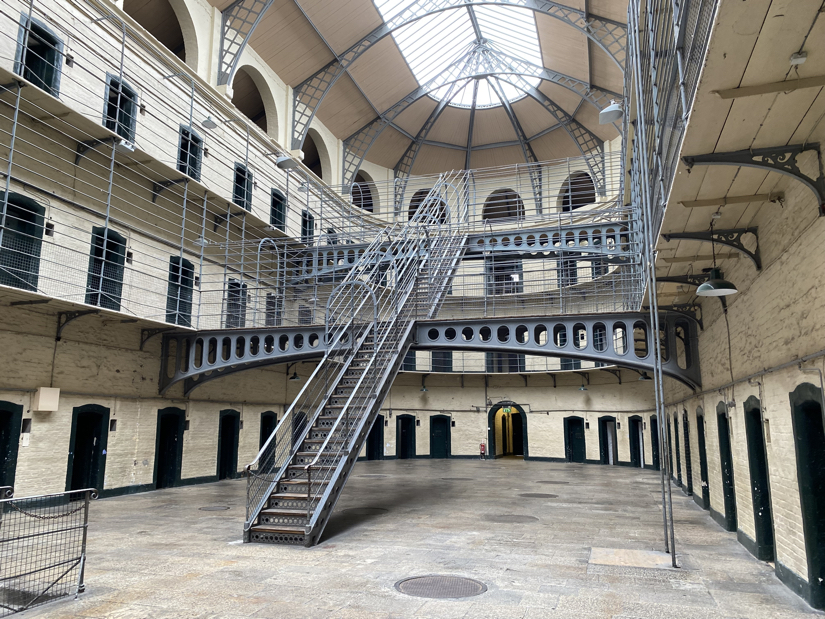
Kilmainham Gaol, Dublin, Ireland, Photo Credit: Justin Chapman
As we toured the panopticon layout of the prison, my wife remarked, “Centuries of pain and suffering in this place.” We stood in the yard where the Easter Rising rebels were shot, a place considered sacred ground by the Irish. It was here where Irish independence was born. The rebel leaders, who lacked support from the Irish people, failed to overthrow the British, but their execution by the British so angered the Irish people that opinion started to turn against the British.
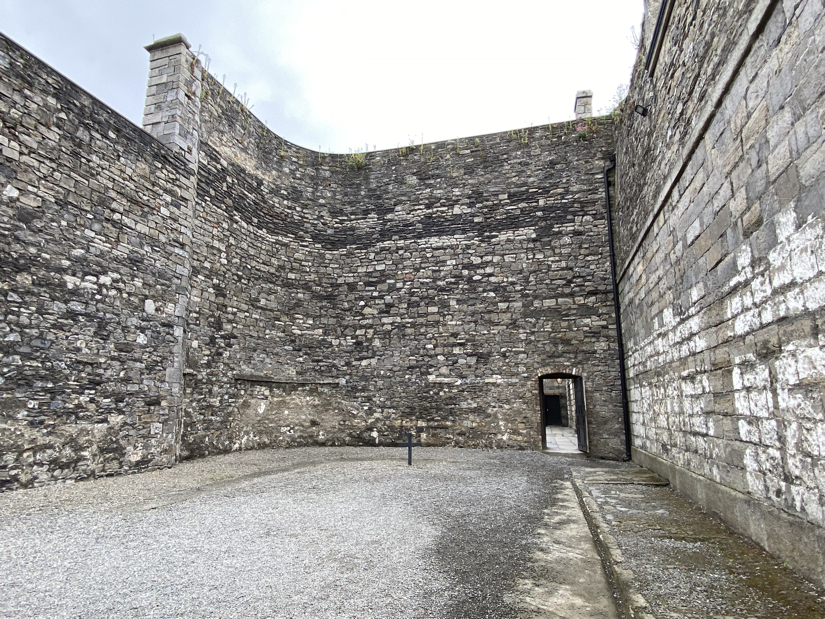
Prison yard where the 1916 Easter Rising rebel leaders were executed, Photo Credit: Justin Chapman
The Guinness Storehouse is, of course, a tourist trap (not to mention the Guinness family were staunch Unionist supporters who opposed Irish independence—check out Netflix’s new show “House of Guinness”), but nonetheless it’s an enjoyable tour that winds its way up through four floors of interactive exhibits, including taste tests and information about the brewing process, the brewery’s history since 1759, and Guinness’s successful marketing campaigns over the years.
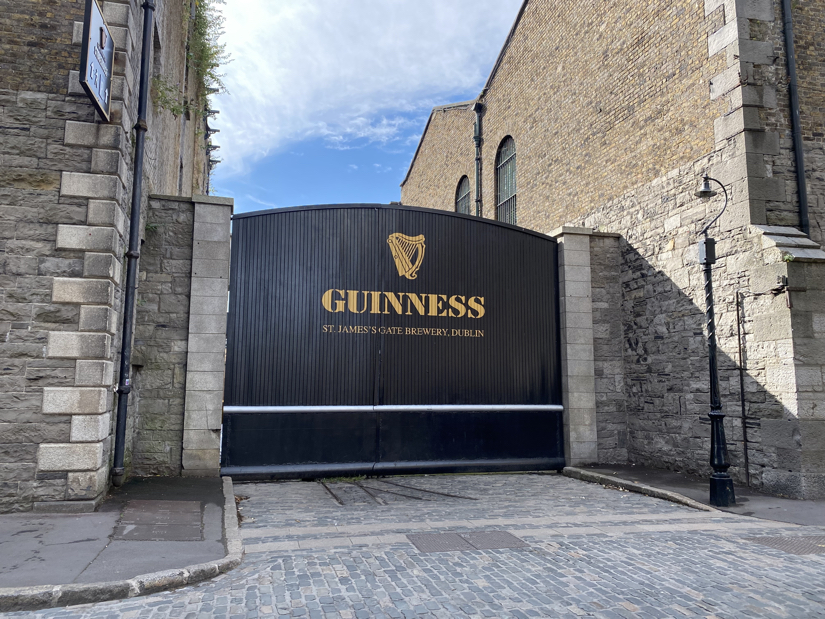
Guinness Factory, Photo Credit: Justin Chapman
I learned the proper way to pour a pint of Guinness and earned a certificate:
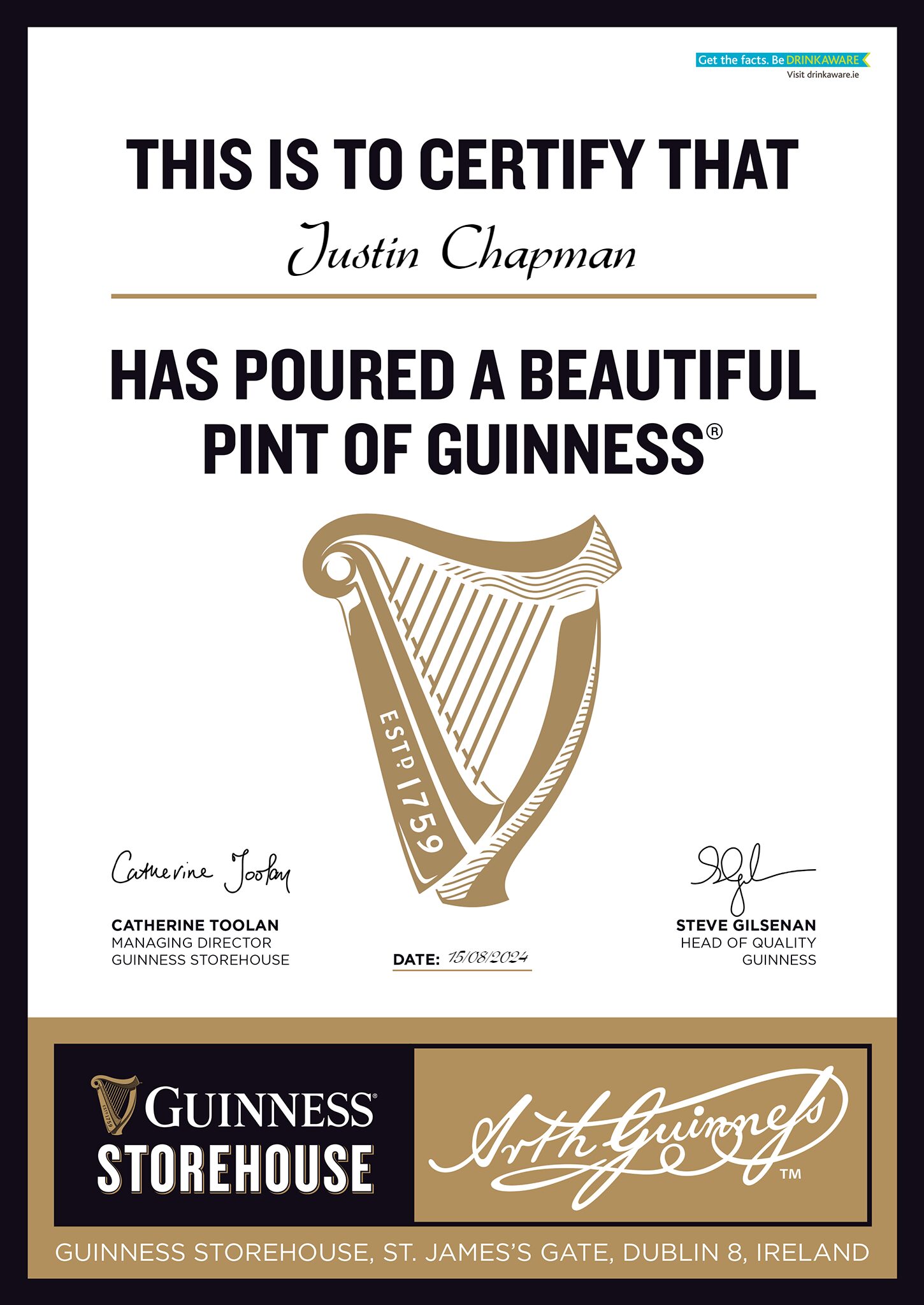
Guinness pouring certificate
We decided to rent a car so we could go on road trips around the island at our own pace. I did all the driving, and it was a challenge to get used to driving on the “wrong” side of the road. Driving in Ireland, especially in the cities, is no joke at all. The Irish are delightfully pleasant people, provided you’re not an American tourist driving there for the first time. I believe I was referred to as a “”feckin eejit”” in that lovely musical Irish accent of a lorry driver. You can’t let your guard down on the highways or local roads, either. Lorries whip past you on roads clearly meant for one vehicle, if that, without a moment’s hesitation. But I relished the challenge, and escaped without a scratch (at least not that the car rental agency noticed, anyway).
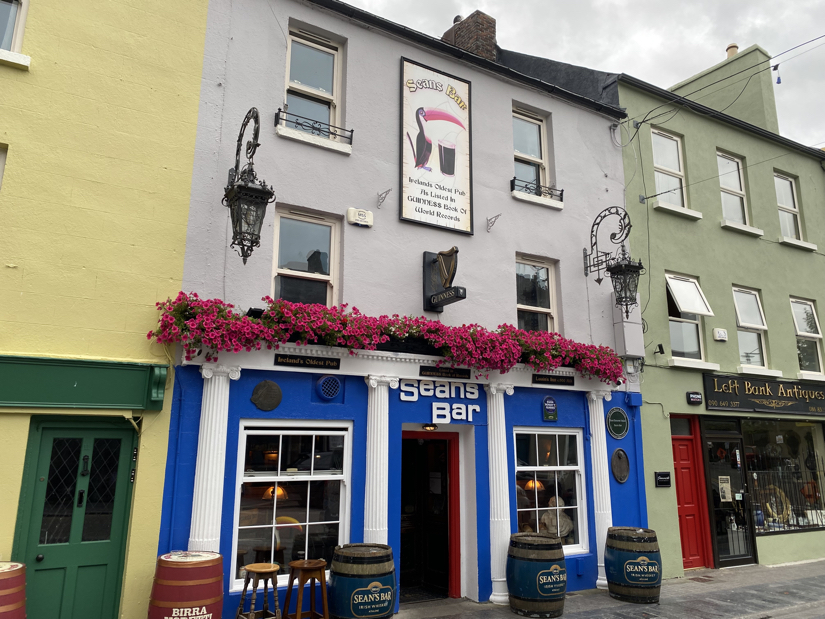
Sean’s Bar in Athlone, Ireland, founded in 900 AD, Photo Credit: Justin Chapman
One of our road trips took us across the island to Galway in the west, a colorful town where the girls went shopping. We hit Athlone in the middle of the island on our way back, where we had beers at Sean’s Bar, the oldest pub in Ireland, established in 900 A.D.
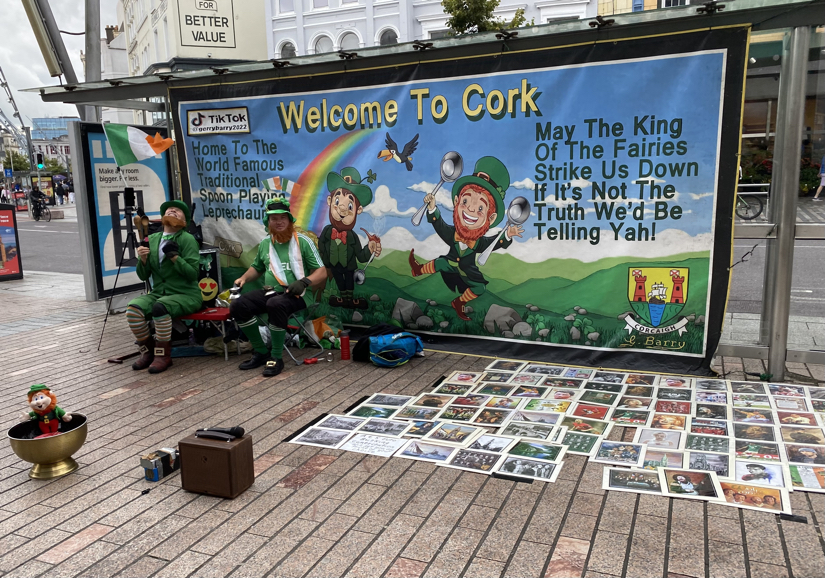
Festive Cork, Ireland, Photo Credit: Justin Chapman
We drove down to Cork, where we had only a few minutes to walk around town because parking was horrendous. Although it was another tourist trap, we made the short trip to Blarney Castle where we kissed the Blarney Stone (my daughter didn’t want to, since you have to lean back over a precipice to reach it). We had a delicious dinner and pints at a pub near the castle. I had an Irish beef stew, which was exquisite.
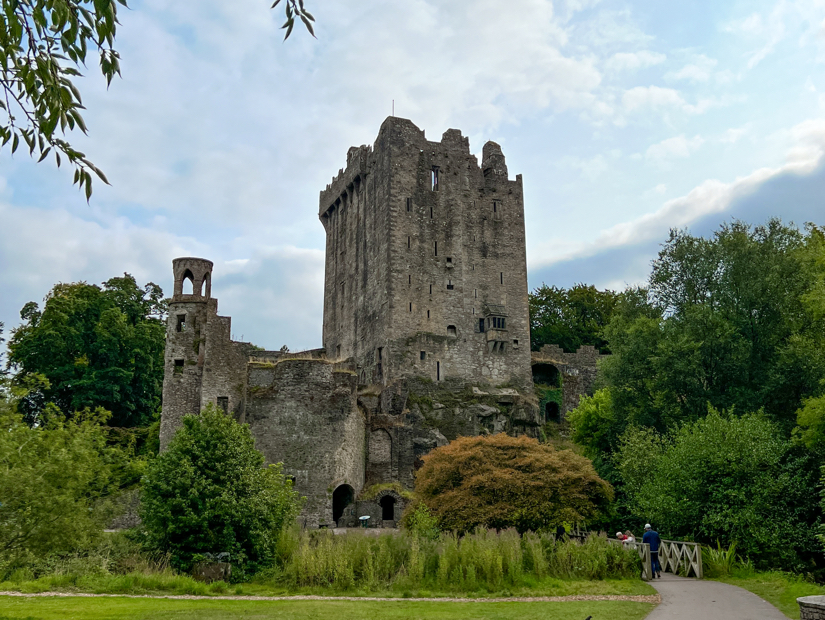
Blarney Castle, Cork, Ireland, Photo Credit: Mercedes Blackehart
Unfortunately, that night is when my wife and I got sick, and the entire stew came up and out of me. Not quite as exquisite. An entire day of our vacation spent in bed, miserable.
Politics of change
The next morning, we managed to roll out of bed, pack our stuff, and drive up to Belfast. I made an obligatory stop on the side of the road at the invisible border to take a photo of the “Welcome to Northern Ireland” sign (later someone covered the word “Northern” with “Occupied”). I was surprised to find that we absolutely loved it there. Even the countryside in the North seemed more picturesque than the Republic.

Welcome to Northern Ireland, Photo Credit: Justin Chapman
I, of course, was thrilled to visit ground zero of the Troubles: West Belfast. For some reason, my wife and daughter didn’t want to come with me to see the neighborhoods where a literal war was recently fought and the so-called Peace Walls built to divide communities, still standing today.
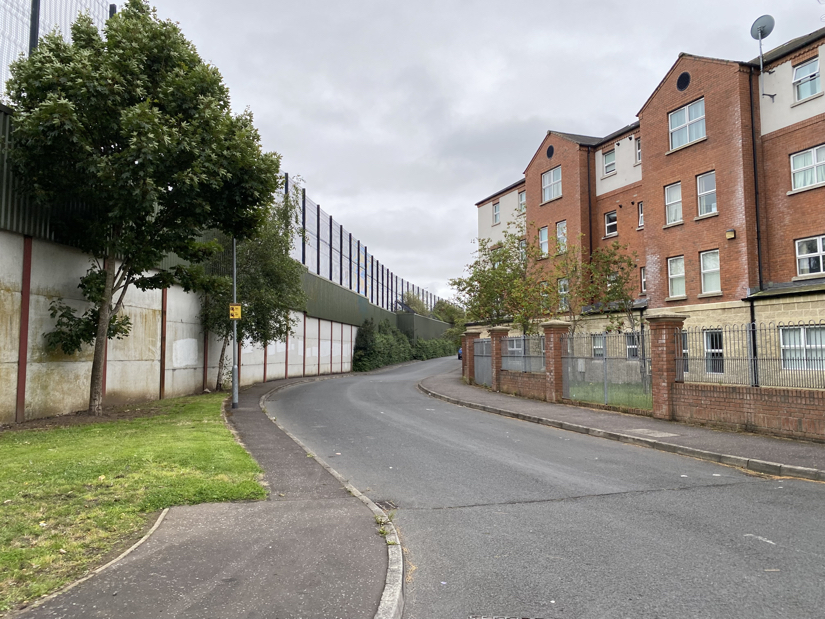
Peace Wall, Belfast, Northern Ireland, Photo Credit: Justin Chapman
As I left, my daughter asked, “Where’s dad going?” My wife’s deadpan response: “To look at a wall.” My daughter: “He’s going to look at a wall?!” They went to the Ulster Museum instead.
Their loss. Walking along the Falls Road and its offshoots into historically Catholic neighborhoods was utterly fascinating. Intricate, sectarian murals are everywhere (including the inspirational mural of hunger-striker Bobby Sands), as are the black taxis driven by old Troubles warriors that tourists can hire to take them on tours of the area. I opted to do my own exploring.
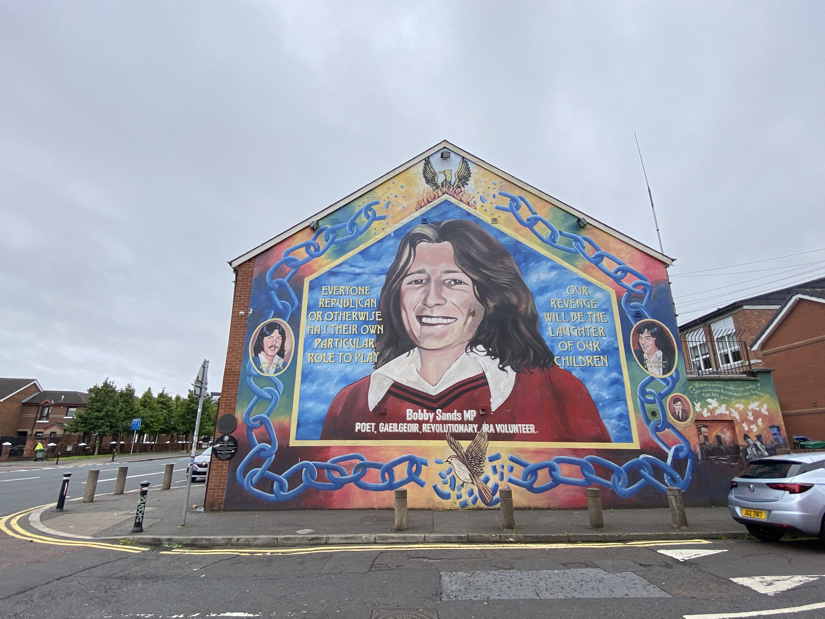
Bobby Sands Mural, Belfast, Northern Ireland, Photo Credit: Justin Chapman
I visited Sinn Féin’s bookstore, the Lark Store, and the Irish Republican History Museum in the historic Conway Mill complex, a 19th century flax mill that now houses artists, small businesses, and community organizations. It’s a small but thorough museum packed with artifacts and information about the conflict. I also made a quick visit to Stormont, where the Northern Ireland Assembly meets (when the government is not dissolved, as it often is).
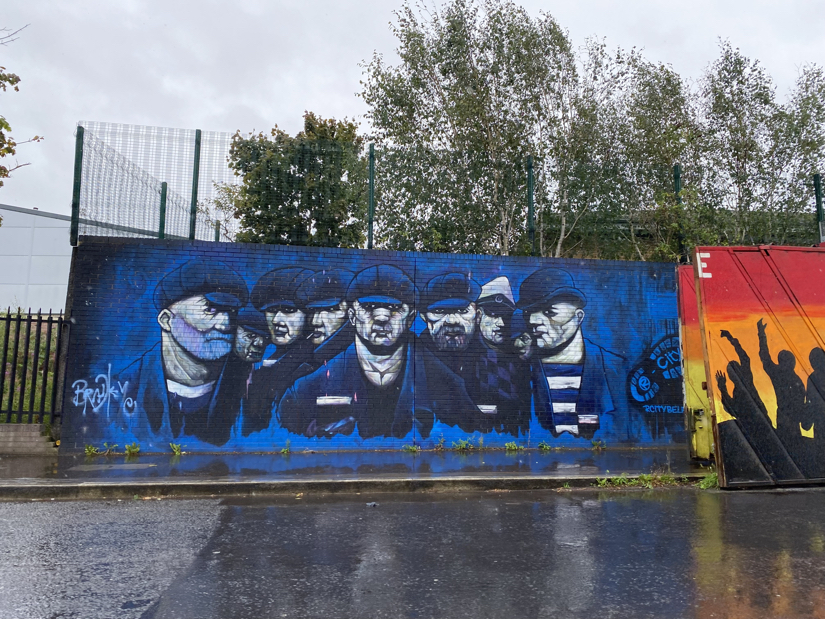
Peace Wall, Belfast, Northern Ireland, Photo Credit: Justin Chapman
I drove through Milltown Cemetery, where many IRA members are buried. In March 1988, three unarmed IRA volunteers were gunned down in Gibraltar. At their joint funeral at Milltown, an Ulster Defense Association (UDA) member named Michael Stone attacked the crowd of Catholic mourners by lobbing grenades and shooting at them. He killed three people and injured more than 60. The crowd gave chase, but the police arrested Stone first. At one of the subsequent Catholic funerals, despite the increased security, two undercover British army officers—Derek Wood and David Howes—drove their car into the crowd of mourners and then started firing at them when they surrounded the car and pulled the two men out. The officers were beaten and then shot dead on the spot by the IRA. You can feel the heaviness of the place when you’re in that cemetery.
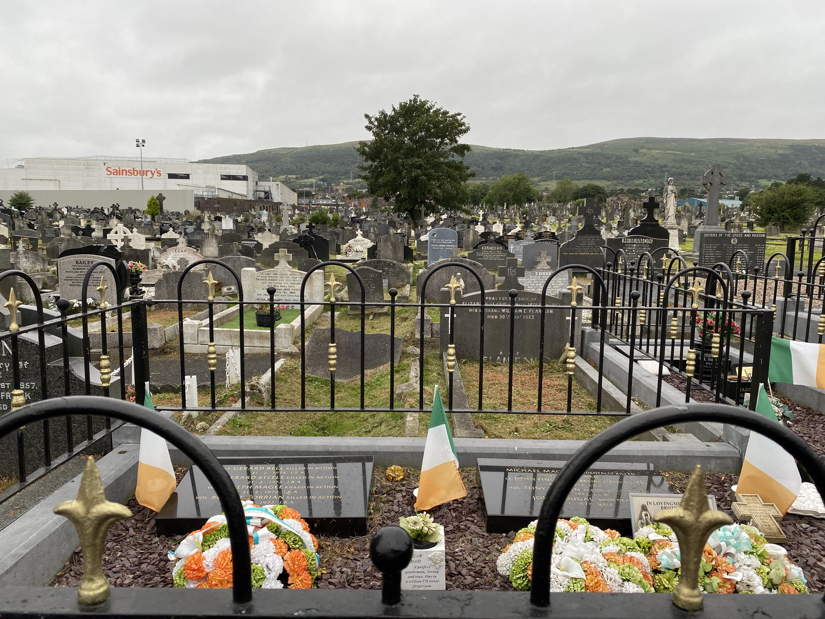
IRA plot in Milltown Cemetery, Photo Credit: Justin Chapman
I walked along the Peace Walls that divide the Catholic neighborhoods around Falls Road from the Protestant neighborhoods around Shankill Road, and through the metal gates that open during the day to allow traffic to pass and close again at night. Homes, playgrounds, and kids’ soccer pitches stand in the shadows of the walls, on both sides. It’s a stark reminder that the tensions here have not been resolved, even more than a quarter century after the Good Friday Agreement.
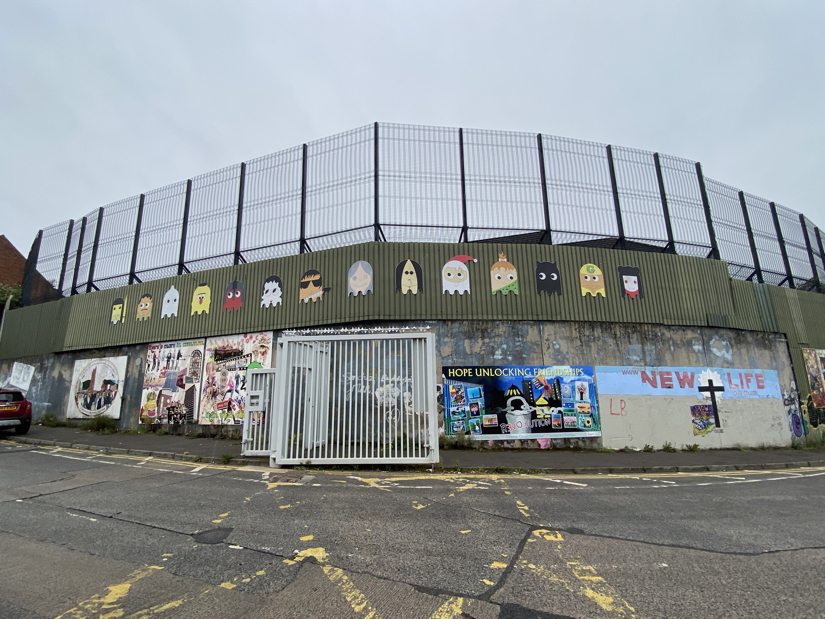
Peace Wall, Photo Credit: Justin Chapman
Indeed, as we were arriving in Belfast, anti-immigrant riots led by loyalist provocateurs broke out, fueled by rightwing disinformation. Much of the lingering violence is one-sided these days, but pretty much everyone would be hard pressed to know that. I asked Adams why the media and pop culture tend to focus exclusively on the IRA, ignoring loyalist paramilitaries.
“Well, I don’t know,” he said. “The media, broadly speaking, represents establishment interests. So the British media will act as it does now, and there are very honorable exceptions to this—there have been very brave news outlets and journalists who have been objective and balanced as they come forward. [But] the British establishment, its allies, its own forces, those who it commissioned, the collusion that it used, the counter gangs that it set up—that narrative was writ large.”
I’ve always been interested in Irish history. England first invaded Ireland back in 1170, hence the saying, “800 years of oppression.” Starting in the 1550s, English and Scots settlers were planted in six of Ulster’s nine counties (six of which make up Northern Ireland today). In 1690, Protestant King William of Orange defeated Catholic King James II during the Battle of the Boyne, launching the Orange Order and sectarianism in the North. In 1916, Irish rebels rose up against their British overlords, but as mentioned they didn’t enjoy support from the Irish people. However, after the British executed the rebel leaders, the tide of public opinion in Ireland began to turn against them. From 1919-1923, the Republic of Ireland was formed amidst civil war, but the UK retained six counties in the North, establishing partition of the island.
In 1968, Northern Irish Catholics began marching for civil rights. Their demands were fairly moderate: one man one vote, stop discrimination in housing and jobs—rights that other UK subjects enjoyed. But the British state saw the protests as a threat to their power, so they responded by shooting at and violently pushing back on demonstrators. The pogroms in August 1969 reinvigorated the Irish Republican Army (IRA) and are seen as the beginning of what became known as the Troubles, nearly 30 years of brutal urban warfare that left more than 3,700 people dead and 30,000 injured.
In March 1981, 10 republican prisoners led by Bobby Sands went on hunger strike to protest their conditions and political status. The British government let them all die.
That decade, Adams was elected a Member of Parliament and president of Sinn Féin. He and Father Alec Reid began talks with John Hume of the Social Democratic and Labour Party and the British and Irish governments that would ultimately lead to the peace process in the 90s. For republicans like Adams who wanted peace, those negotiations with the British and the Protestants were like pulling teeth. How did they ultimately prevail?
“Sheer tenacity,” Adams said. “And also a willingness to move from the politics of resistance into politics of change. We were the first political party to adopt peace as a political objective. And eventually—eventually—after many stops and starts, we got the negotiations for the Good Friday Agreement. We had a British government which was more positive and progressive than previous ones. Before we actually went into the negotiations, Sinn Féin had been involved in a series of negotiations with both governments and the U.S., conducted through intermediaries and back channels, but we had a lot of the work done by the time we came to the negotiations, which led to the historic Good Friday Agreement.”
Inevitable reunification
We drove up to Giants Causeway, which has tall dramatic cliffs that we hiked, leading down to the beach featuring enormous basalt columns and weird rock formations. Truly beautiful.
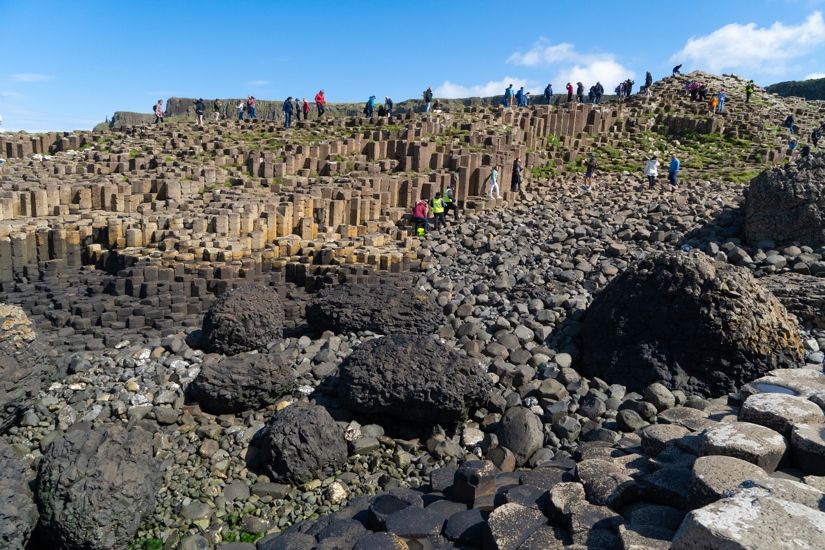
Giants Causeway, Photo Credit: Mercedes Blackehart
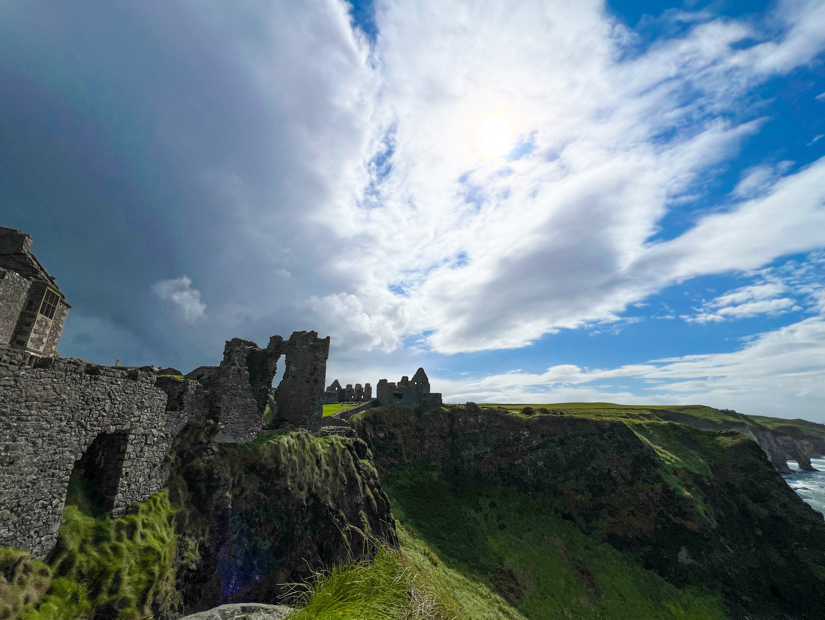
Nearby is Dunluce Castle, a ruined fortress on the edge of steep cliffs above the ocean that’s hundreds of years old.
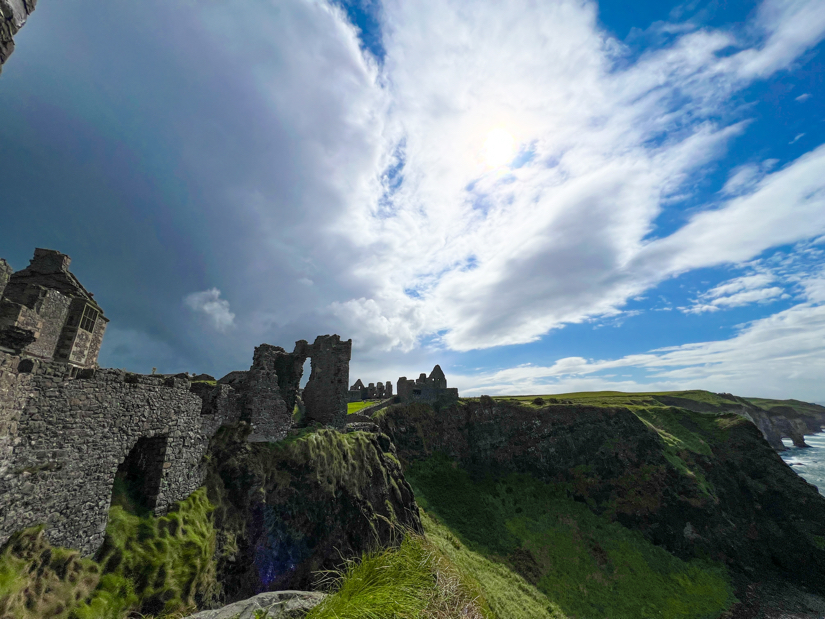
Dunlace Castle, Photo Credit: Mercedes Blackehart
On our way back to Belfast, we drove through the gorgeous no man’s land that is the Sperrin Mountains, where we found two huge wooden statues. This day was more my wife and daughter’s jam.
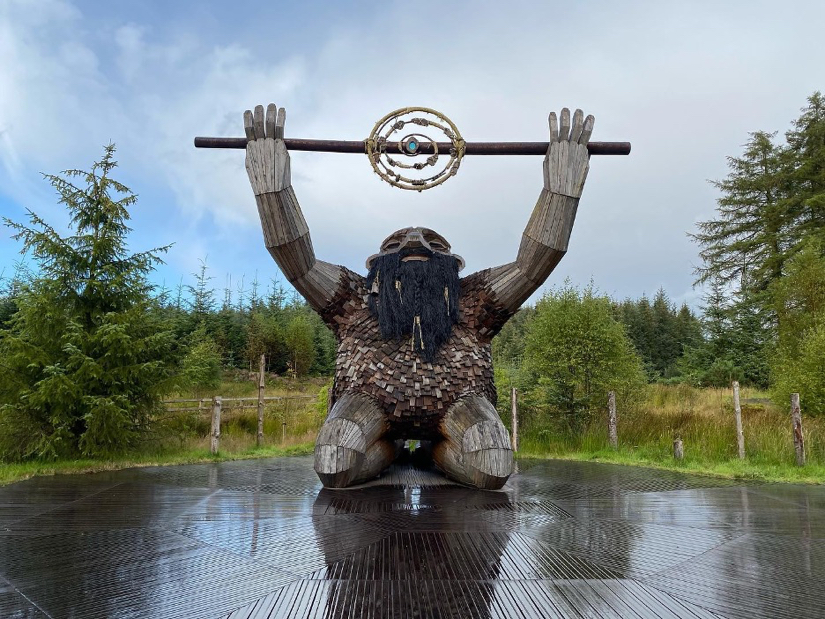
Giants Ring, Photo Credit: Mercedes Blackehart
On the way back to Dublin, we stopped at Giants Ring, an ancient Neolithic site outside Belfast the original purpose of which is unknown, as well as Slieve Gullion, a forest park with beautiful nature walks (and more fairy houses).

Young Girl @ Giants Ring, Photo Credit: Mercedes Blackehart
On our last day in Dublin, we were planning to see my wife’s dad in NYC through the Portal, but it was connected to some European city instead. That’s when my family and I met up with Irish journalist Rory Carroll and his family at a pub in Grafton Street.
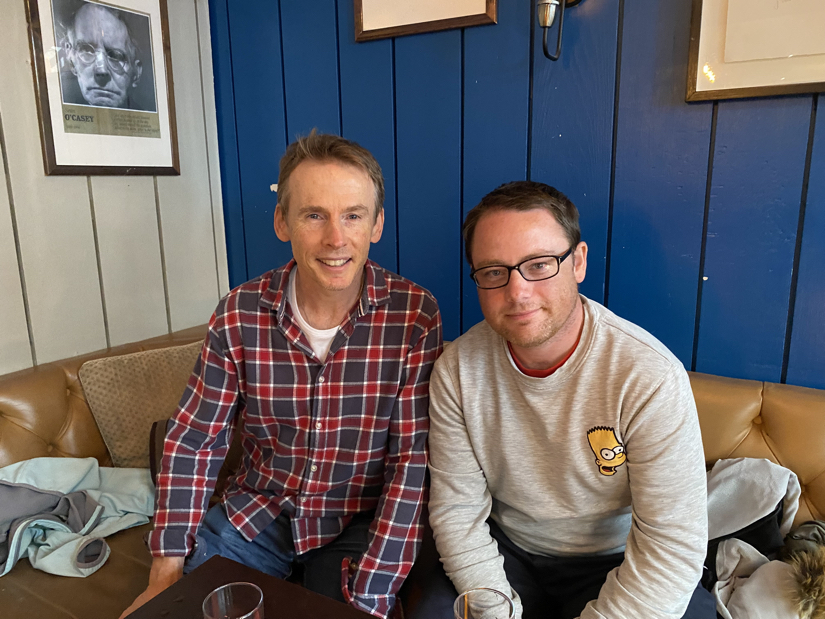
The author with Irish journalist Rory Carroll, Photo Credit: Justin Chapman
I first met Carroll when he spoke at a Pacific Council on International Policy conference years ago when I worked in the Council’s communications department. He also wrote about Bombay Beach in The Guardian, and I reached out to him when my wife and I covered the Bombay Beach Biennale for Culture Honey to get his impressions. Last year, I interviewed him on my show “Well Read.” (Also check out my interview with Irish journalist Ed Moloney, author of The Secret History of the IRA, and my interview with Irish journalist Fintan O’Toole, author of We Don’t Know Ourselves: A Personal History of Modern Ireland, which I also wrote about for the Irish Post.)
I had Carroll sign a copy of his book about the attempted assassination of Margaret Thatcher by the IRA. Carroll and I had a great chat about the IRA, Sinn Féin, Kneecap, Adams, Belfast, the Troubles, Brexit, Bombay Beach, Mad Mike, Paradise Springs (I gave him a copy of my new book), how Ireland has changed, journalism, and politics.
He said there was a rumor that Adams could run for president of Ireland in 2025, after Michael Higgins terms out (the election is October 24). I asked Adams about it.
“No, I’m not running for presidential or any other elected office,” Adams said. “This question keeps being asked of me, no matter how many times I knock it back.”
On Irish reunification, Carroll said he thinks it’s not inevitable. Adams has a different view.
“Eight hundred or 900 years later, we’re still struggling to get our freedom, and we haven’t given up,” Adams said. “I’m convinced that we’re going to get the [Irish reunification] referendum, and I’m convinced that a majority of people will support that, and we will live in a united Ireland.”
*